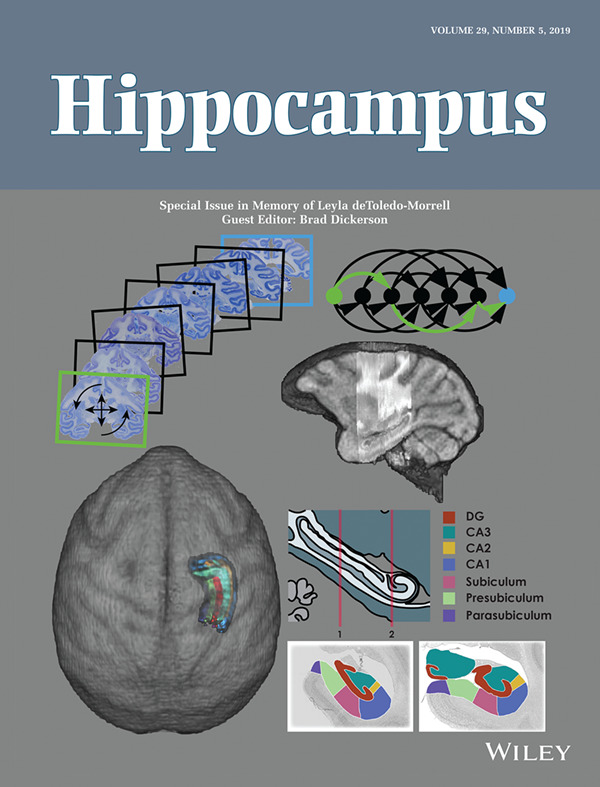
Welcome to the Dickerson Lab
Document Actions


In Brad Dickerson's Laboratory, we seek to understand the
relationships between brain anatomy, physiology, and behavior in humans across
the lifespan and in those with neurodegenerative diseases. Major focus areas of our research
include: memory, language, emotional, and social abilities and the brain systems that subserve them in normal individuals
and how these abilities and brain systems change with aging, Alzheimer's disease, and related
disorders (including frontotemporal dementias and posterior cortical atrophy);
understanding how aging, Alzheimer's disease, and related disorders alter the normal anatomy
and function of the human brain, and determining whether this knowledge can assist in diagnosis
and monitoring of these conditions; and the further development of new neuroimaging and
behavioral technology for making quantitative measurements of these abilities and brain systems. We are also pursuing studies of
language in progressive aphasias; and social cognition and affective functions
in normal aging and how these are affected by frontotemporal dementias and Alzheimer's
disease. In addition, we pursue some investigations related to the development and promotion of
capacities to compensate for age- and disease-related changes.
In our research on the anatomy and physiology of
memory and other cognitive functions, we study brain structure and function using magnetic resonance
imaging (structural and functional MRI) and positron emission tomography (PET), and try to understand
the roles of various brain systems in these functions. Studies of aging focus primarily on individuals in
their 50-90s, and seek to identify age-related changes in brain structure and function that relate to
memory, language, and cognitive/affective/social task performance. Such
investigations are also ongoing in people with mild cognitive impairment, Alzheimer's disease, primary progressive aphasia,
frontotemporal dementia, posterior cortical atrophy, progressive supranuclear palsy, corticobasal
degeneration, and related disorders.
In our research on the ways that aging, Alzheimer's disease, and related disorders affect brain anatomy, we use MRI and PET to investigate the locations and degrees to which brain regions are affected by the disease, the molecules involved in these diseases, and how these imaging measures relate to clinical symptoms and difficulties with the performance of cognitive tasks.
We continue to develop and apply neuroimaging methods including "ultra" high resolution MRI to study brain structure and function at an unprecedented level of detail. We are actively working with colleagues to develop and apply new PET methods to measure molecules in the brain that have never been measured before, such as tau. We are currently working to refine imaging methods to measure the functional and structural integrity of memory and other systems of the brain, including the functional connectivity of brain systems and how these measures relate to behavior.
A special focus of our research is on mild cognitive impairment (MCI),
in which individuals demonstrate subtle memory or other cognitive loss that may be the
earliest symptom of Alzheimer's disease but which is often difficult to
distinguish from the aging process itself. We believe that brain imaging
tools offer the potential to assist in the identification of individuals
with the earliest symptoms of Alzheimer's disease or FTD or related disorders, for whom treatments
currently under evaluation to slow the disease process may ultimately be
effective. Other individuals may have different types of mild
cognitive impairment with early language, executive, or affective difficulties,
which may be related to Alzheimer or non-Alzheimer pathologies.
In conjunction with a number of collaborators, in 2007 and 2008 Dr. Dickerson founded the MGH
Frontotemporal Disorders Unit, Primary
Progressive Aphasia Program, and Posterior Cortical
Atrophy Program. The MGH FTD Unit aims to develop better
knowledge about and diagnosis and treatment of all forms of FTD, atypical AD, and
related focal or young-onset dementia syndromes. The PPA Program aims to better
understand and treat primary progressive aphasia syndromes using existing
technologies (including speech therapy) and by developing new diagnostic
and treatment technologies. The PCA Program aims to better differentiate
focal syndromes involving parietal and parieto-occipital dysfunction from
other disorders for early diagnosis, and to better understand these disorders
with the ultimate goal of improving treatment options.
Further details on projects in all of these areas are presented in the "Research" pages. "People" contains information on members of our research team. The "Tools" pages describe the tools and technology we use, some of which are uniquely available through the Martinos Center for Biomedical Imaging, the MGH Gerontology Research Unit, the Massachusetts Alzheimer's Disease Research Center, the Nuclear Medicine and Molecular Imaging program, and the MGH Center for Morphometric Analysis, with which our lab is affiliated. Scientific and clinical manuscripts are listed in "Publications." "How to participate" describes opportunities for participants of all types, including research subjects (we are currently recruiting), collaborators/students, and donors. The "MCI wiki" is an internal resource of our group's collective knowledge.
Our research is generously funded by the National Institute on Aging, National Institute of Neurological Disorders and Stroke, National Institute of Mental Health, the National Institute on Deafness and Communication Disorders, and the Alzheimer's Association, as well as generous private donors.