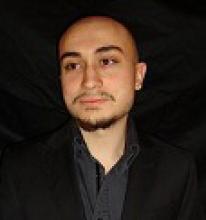
Berkin Bilgic, PhD
Professional Information
Associate Professor in Radiology, Harvard Medical School
Research Staff, Massachusetts General Hospital
Affiliated Faculty, Harvard-MIT Division of Health Sciences and Technology
PhD Electrical Engineering and Computer Science, MIT, 2013
Contact
Mailing Address
Bldg 149, 13th St
13th Street
Charlestown, MA 02129 USA
Additional Information
Biosketch
MRI has demonstrated ability to provide exquisite contrast for non-invasive imaging. What limits its efficiency and sensitivity are the tradeoffs between scan time, resolution and SNR. My research is devoted to breaking this stalemate by developing acquisition and reconstruction methods that synergistically exploit MR physics, signal processing, AI, optimization algorithms and novel hardware capabilities. I pursue this goal on multiple fronts:
(i) Rapid comprehensive brain MRI: We developed the wave-CAIPI acquisition trajectory to fully harness the encoding capability of high-channel count receivers and provide an order of magnitude faster clinical MRIs.
(ii) Efficient quantitative imaging: Our developments in quantitative relaxometry acquisition have enabled fast, open-source whole-brain T1 and T2 mapping at 1 mm3 resolution in 2 minutes available on multiple scanner vendors.
(iii) Multi-contrast imaging with joint reconstruction: We exploit similarities across multiple contrasts acquired in clinical MRI exams with our joint parallel imaging and deep learning strategies. These can be combined with wave encoding to provide >10 faster anatomical and quantitative imaging scans.
(iv) Neuroimaging at the mesoscale and at ultra-high fields: Our readout strategy, PRIME, enables highly accelerated echo planar imaging (EPI) while eliminating geometric distortion and lends itself to high-resolution diffusion acquisitions. Combining this with gSlider volumetric encoding allows 500 m isotropic in vivo diffusion imaging on 3T scanners. We helped spearhead the development of Quantitative Susceptibility Mapping (QSM), a contrast mechanism that probes the magnetic properties of tissues in vivo. The signal boost afforded by QSM at 7T allowed us to provide a biomarker sensitive to tissue iron and myelin at 500 m isotropic resolution.
(v) Self-supervised deep learning image reconstruction: We develop scan-specific models capable of incorporating MR physics into reconstruction while training deep learning priors to boost the reconstruction fidelity. These models are trained on each individual subject by employing a self-supervised training paradigm to obviate the need for external, high quality training datasets that may be challenging to acquire.